
Social Media Lead Generation: Why It's Not Working (And How to Fix It)
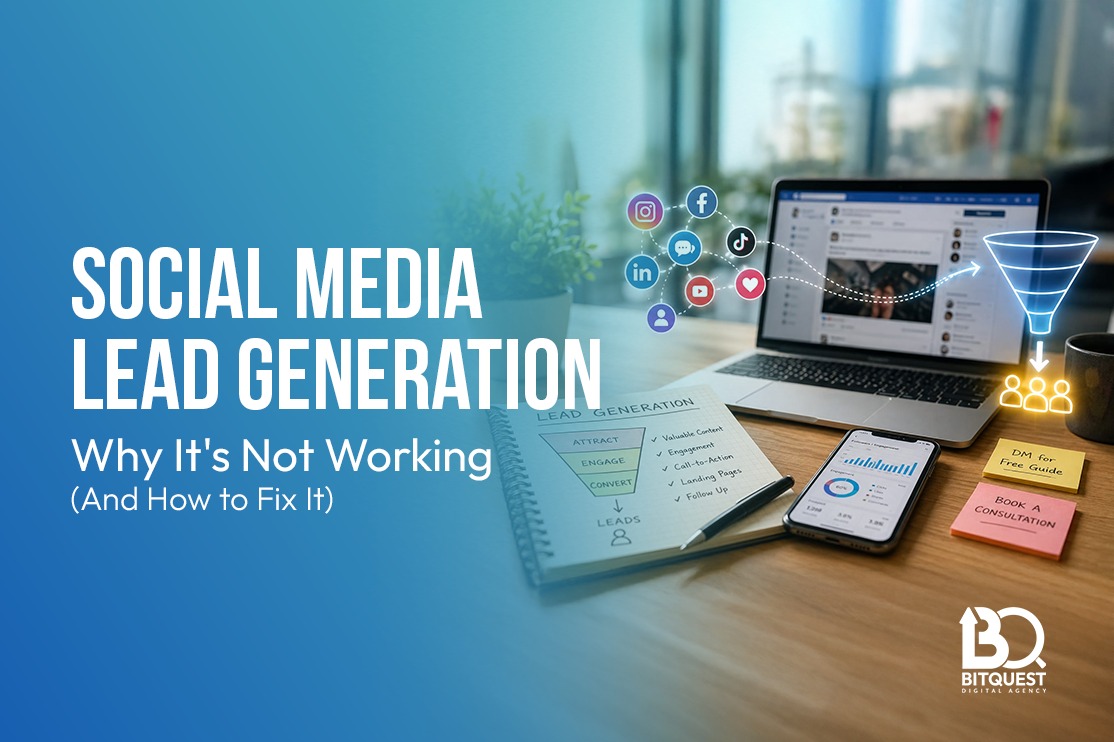
Your posts are going out on schedule. Your follower count keeps climbing. Your engagement numbers look decent on the dashboard. So why does your inbox stay empty?
This is one of the most common frustrations business owners bring to us, and it usually comes down to one thing: there's a big difference between being active on social media and actually running social media lead generation.
Posting content and generating leads are not the same job. Without a deliberate approach to social media marketing for lead generation, even the best-looking feed will only ever produce likes, not paying customers.
Here's where things typically go wrong, and what an actual fix looks like.
Problem 1: You're Optimising for Vanity Metrics
The fix: track buying intent, not applause.
Reach, followers, and likes feel good to watch grow, but none of them pay your bills. Many businesses judge their social performance purely by these numbers, then wonder why sales never follow. A post with thousands of views and zero click-throughs has done nothing for your pipeline.
The fix: Shift your reporting toward metrics that actually indicate buying intent — link clicks, profile visits that lead to website traffic, DMs, comments asking questions, and form completions from social ads.
These are the numbers that tell you whether your content is working toward real leads, not just visibility.
Problem 2: Your Content Has No Clear Next Step
The fix: give every post a job to do.
Scroll through most business pages and you'll find polished graphics, decent captions, and no indication of what the viewer is supposed to do next. If a post doesn't tell someone where to go, most people simply keep scrolling.
The fix: Every piece of content should have a purpose — educate, build trust, or drive action. Mix in posts with a direct call-to-action: “DM us for a free audit,” “Link in bio to book a slot,” or “Comment ‘GUIDE’ and we'll send it over.” Small prompts like these are often the missing piece between content and actual conversions.
Problem 3: You're Posting Without a Strategy
The fix: build around your buyer's real questions, not trending audio.
Random posting, with no research into what your audience actually searches for or responds to, rarely produces results. Many business owners we speak with post because “we're supposed to be on social media,” not because each post is tied to a business goal.
Businesses that eventually bring in a social media marketing agency usually discover this gap first — there was never a documented plan connecting content themes, target audience, and revenue goals in the first place.
The fix: Build a content calendar around your buyer's actual questions and objections, not just trending audio. Every third or fourth post should exist purely to move a prospect closer to contacting you.
Problem 4: You're Not Engaging Back
The fix: reply fast, and let automation support conversations, not replace them.
Social platforms reward two-way conversation, not one-way broadcasting. If comments and DMs go unanswered for hours, the algorithm quietly reduces your reach, and interested prospects lose momentum and move on.
The fix: Reply promptly, ask questions in captions to spark comments, and consider ai-powered tools for social media engagement to flag and prioritise high-intent messages so nothing slips through when your team is busy. Automation should support conversations, not replace them entirely.
Building an Actual Strategy Around Social Media Marketing for Lead Generation
Fixing these problems individually helps, but the real shift happens when they come together as one connected approach: :
Know your ideal customer — build content around their real problems, not generic industry trends.
Use lead magnets — free guides, checklists, or consultations exchanged for contact details.
Send traffic to a dedicated landing page, not just your homepage, so intent isn't lost.
Retarget engaged users with ads, since most people won't convert on the first visit.
Track cost per lead and lead quality, not just impressions, so budget goes where it actually performs.
This is what separates accounts that look busy from accounts that actually contribute to social media lead generation.
Should You Fix This In-House or Bring in an Agency?
Some businesses have the internal bandwidth to rebuild their social media lead generation strategy, test content formats, and analyse performance weekly. . Many don't — and that's usually when a search for a “social media marketing agency near me” begins.
If you're comparing options, look beyond the follower count on an agency's own page. A top rated social media marketing agency in Malaysia should be able to show you real examples of leads generated for past clients, not just polished content samples.
At BitQuest, we work with businesses as a full digital marketing agency Malaysia partner — combining social strategy with paid campaigns, website optimisation, and support from our in-house SEO agency in Malaysia team, so your social presence isn't working in isolation. When social content, search visibility, and your website all support each other, social media lead generation stops being guesswork and becomes a predictable part of your marketing.
Key Takeaways
Vanity metrics don't equal leads — track clicks, DMs, and form fills instead.
Every post needs a clear next step for the viewer to take.
A documented content strategy consistently outperforms random, trend-chasing posts.
Fast, consistent engagement keeps both algorithms and prospects interested.
Lead magnets, dedicated landing pages, and retargeting turn interest into contact details.
Pairing social media with SEO and paid strategy compounds results over time.
Conclusion
An active social media page and a lead-generating one are not automatically the same thing. If your current approach isn't producing enquiries, the fix usually isn't “post more” — it's posting with intent, guiding your audience toward a next step, and measuring the numbers that actually matter. Whether you handle this in-house or bring in support, treating social media as part of a broader lead generation strategy, rather than a standalone activity, is what finally turns followers into customers.
FAQs
Why isn't my social media generating any leads?
Most accounts focus on followers and likes instead of a structured plan for turning attention into contact details. Without clear calls-to-action, lead magnets, and a way to capture visitor information, even high engagement rarely converts into actual enquiries.
How long does it take to see leads from social media?
It varies by industry and starting audience size, but most businesses start seeing measurable movement — clicks, DMs, or form submissions — within four to eight weeks of running a focused, consistent strategy.
What's the difference between social media marketing and generating leads from social media?
Social media marketing covers brand awareness, engagement, and community building broadly. Turning that attention into leads is a specific subset focused on trackable contact information, such as form fills, DMs, or booked consultations.
Do I need paid ads to generate leads on social media, or can organic content work?
Organic content can generate leads, especially with strong engagement and clear CTAs, but paid ads speed up the process significantly by reaching cold audiences and retargeting warm ones who didn't convert the first time.
Which social media platform is best for lead generation?
It depends on your audience and industry. LinkedIn tends to work well for B2B, Instagram and Facebook suit consumer brands and local businesses, and TikTok increasingly drives leads for younger, lifestyle-focused audiences.
How do I know if a social media marketing agency is actually good?
Ask for real results from past clients — leads generated, cost per lead, or conversion improvements — rather than just follower growth or content samples. A credible agency should be transparent about reporting and strategy, not just output.