
Topical Authority in SEO: How to Build Content That Google and AI Trust
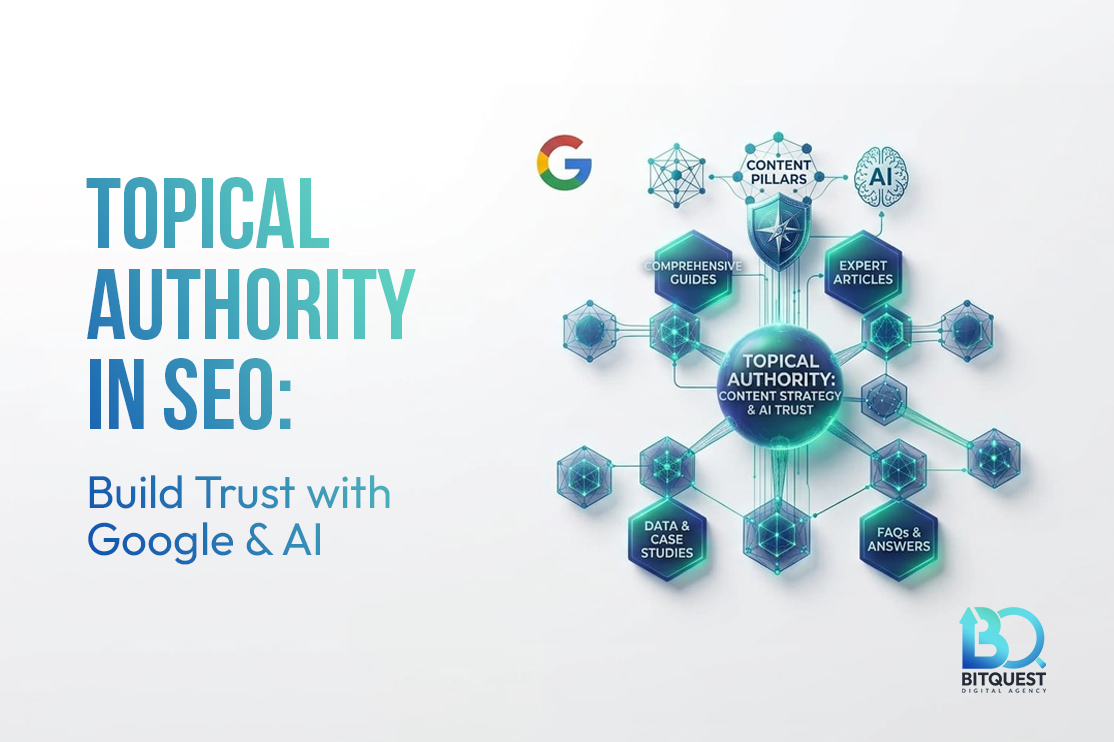
Topical Authority at a Glance
Definition: Topical authority is the level of trust and expertise a search engine or AI model assigns to a website based on how comprehensively it covers a specific subject area.
Why It Matters: Modern search algorithms and AI platforms (Gemini, ChatGPT, Perplexity) prioritize deeply interconnected content clusters over single optimized pages.
Core Strategy: Build 1 central pillar page connected to 8–15 targeted supporting articles using strategic internal links, clear intent matching, and updated E-E-A-T signals.
Search engines used to reward pages that repeated the right keywords enough times. That approach barely works anymore. Google's algorithms, along with AI-powered platforms such as ChatGPT, Gemini, and Perplexity, now look at how deeply a website understands its subject before deciding whether to trust it. This is where Topical Authority in SEO comes in, and it's quickly becoming the deciding factor between websites that rank consistently and websites that struggle to gain traction.
In short, topical authority is how thoroughly a website covers a subject through interconnected, high-quality content — and it's what search engines and AI platforms now use to decide which sites to trust and reference.
For businesses navigating the competitive digital landscape in Malaysia, building this kind of authority takes more than publishing the occasional blog post. It requires a structured content plan, internal linking, and a genuine understanding of what your audience is searching for. While some brands execute this internally, many choose to partner with an established SEO agency in Malaysia to streamline execution and scale results. .
What Does Topical Authority Actually Mean?
Topical authority refers to how thoroughly a website covers a subject compared to other sites competing for the same audience. A site with strong topical authority doesn't just have one good article on a subject. It has dozens of interconnected pages that address different angles, questions, and subtopics related to that core theme.
Search engines treat this depth of coverage as a trust signal (as defined in Google's Search Quality Rater Guidelines regarding E-E-A-T). If your website consistently publishes accurate, well-structured content around a topic, Google is more likely to view your domain as a reliable source and rank your pages higher for related searches. Research into AI retrieval mechanisms shows that modern generative engines operate similarly, pulling from sources that show consistent expertise across a topic rather than isolated, one-off articles.
Building Topical Authority in SEO is no longer optional for businesses that want long-term visibility. It's become one of the clearest ways to separate credible websites from ones simply trying to game the algorithm.
Why Topical Authority Matters More in the Age of AI Search
AI-generated answers pull information from sources that show clear expertise on a subject. Unlike traditional rankings, where a single well-optimised page could perform reasonably well on its own, AI systems tend to reference websites that have built a recognisable footprint across an entire topic cluster.
This shift means Malaysian businesses now need to think beyond individual keywords in their content marketing. A single blog post targeting "best coffee shops in Kuala Lumpur" carries far less weight than a website with dozens of pages covering coffee culture, brewing methods, local roasters, and café reviews. The second website simply looks more credible, both to readers and to the algorithms deciding what to surface.
How to Build Topical Authority: A Practical Approach
Start With a Content Pillar
Choose a core subject that reflects your business and audience needs, then map out the related questions, subtopics, and search terms people use around it. This pillar becomes the anchor page that links out to more specific, supporting content.
Create Supporting Content Around It
Every pillar needs supporting articles that dig into specific angles. If your pillar is "digital marketing for small businesses," supporting pieces might cover budgeting for ads, choosing the right social platforms, or measuring campaign performance. Each piece should link back to the pillar and to other related articles, forming a web of connected, relevant content.
Focus on Search Intent, Not Just Keywords
Ranking well today depends on understanding search intent rather than stuffing pages with exact-match phrases. Ask what a reader actually wants when they type a query. Are they comparing options, looking for a how-to guide, or ready to make a purchase? Matching content to intent is central to any effective SEO content strategy, and it's a habit that separates content built for algorithms from content built for people.
Keep Content Accurate and Updated
Outdated statistics, broken links, or old screenshots quietly damage trust. Revisiting older articles and refreshing them with current data keeps your topic cluster credible and shows search engines that your website stays active and reliable.
Strengthen E-E-A-T Signals
Experience, Expertise, Authoritativeness, and Trustworthiness continue to guide how both traditional and AI search engines evaluate content. Author bios, case studies, client testimonials, and clear sourcing all contribute to a website that feels genuinely knowledgeable rather than generic. A site that talks about these signals without showing any of them — no named author, no real examples — tends to undercut its own credibility, which is worth keeping in mind when applying this to your own content.
Common Mistakes That Weaken Topical Authority
Many businesses unintentionally undermine their own progress. Publishing content sporadically, covering unrelated topics without a clear structure, or duplicating similar articles without adding new value are among the most frequent issues. Thin content that skims the surface of a subject rarely builds trust, no matter how often it's published.
Another common mistake is treating SEO as a one-time project rather than an ongoing effort. Topical authority builds gradually, through consistent publishing and strategic linking, not through a single burst of content.
Why Local Businesses Turn to an SEO Agency in Malaysia
Building topical authority requires research, planning, and consistency that many internal teams struggle to maintain alongside day-to-day operations. This is why partnering with an experienced local team often makes a measurable difference. A specialised SEO agency in Malaysia can identify content gaps, structure a topic cluster properly, and track performance in a way that's difficult to replicate without dedicated resources.
The Best SEO agency in Malaysia for your business will typically combine technical SEO with a genuine content marketing Malaysia strategy, rather than treating the two as separate services. This combination is what allows websites to build real authority instead of chasing short-term ranking spikes.
At BitQuest, this is the approach we take as a search engine optimization agency — blending structured content planning with technical SEO fundamentals to help brands build the kind of depth that both Google and AI search platforms recognise as trustworthy. For businesses that also want faster visibility while their organic authority grows, pairing this with a reliable search engine marketing service can bridge that gap effectively.
Final Thoughts
Building Topical Authority in SEO isn't a trend that will fade with the next algorithm update. It reflects a genuine shift in how search engines, and increasingly AI platforms, evaluate credibility. Businesses that commit to structured, intent-driven content will be far better positioned than those still chasing individual keywords one page at a time.
Whether you're building your content strategy internally or partnering with an SEO agency in Malaysia to accelerate the process, the goal remains the same: create a website that genuinely knows its subject, and let that expertise speak for itself.
Partner With BitQuest
At BitQuest, our approach as a search engine optimization agency blends structured content planning with technical SEO fundamentals, helping brands build the kind of depth that both Google and AI search platforms recognise as trustworthy. For businesses that also want faster visibility while their organic authority grows, pairing this with a reliable search engine marketing service can bridge that gap effectively.
FAQs
What is topical authority in SEO?
Topical authority is the measure of trust and expertise a search engine assigns to a website based on how thoroughly it covers a specific subject through interconnected, high-quality content. .
How is topical authority different from domain authority?
Domain authority measures overall website strength based on backlinks, whereas topical authority focuses on how deeply a site covers one specific subject area.
How long does it take to build topical authority?
It typically takes 3 to 6 months of consistent, well-structured publishing and internal linking to build measurable topical authority in most industries.
Does topical authority help with AI search visibility?
Yes, topical authority directly drives AI search visibility because platforms like ChatGPT, Gemini, and Perplexity reference websites that demonstrate comprehensive expertise across a topic cluster.
How many articles do I need to build topical authority on a subject?
There is no fixed article count required. What matters most is addressing all user intent angles comprehensively and connecting the articles logically.
Can a small business build topical authority without a large content team?
Yes, small businesses can easily build topical authority by following a disciplined content calendar or collaborating with an SEO agency in Malaysia to execute topic clusters efficiently.
Is topical authority only about blog content?
No, topical authority applies across your entire domain. Service pages, FAQs, pillar pages, and product guides all contribute to your subject depth.
Does updating old content help topical authority?
Yes, refreshing existing content significantly strengthens topical authority by maintaining accuracy, updating statistics, and signaling continuous activity to search engines.